
Global climate change is accelerating, bringing an unprecedented rise in extreme weather events—from devastating hurricanes and heavy floods to severe, prolonged heatwaves. As these environmental challenges intensify globally, the underlying fragility of traditional, centralized power grids has been starkly exposed. For municipalities, urban planners, and infrastructure developers worldwide, prolonged power outages have shifted from a rare inconvenience to a pressing public safety crisis.
In recent years, grid failures caused by extreme weather have cost economies billions of dollars, halting transportation and cutting off essential city services. Ensuring the continuous operation of main roads, critical emergency routes, and remote off-grid areas during these critical moments is no longer an optional upgrade; it is now the absolute top priority in building modern, resilient, and future-proof cities.
The Vulnerability of Traditional Infrastructure
———————————————–
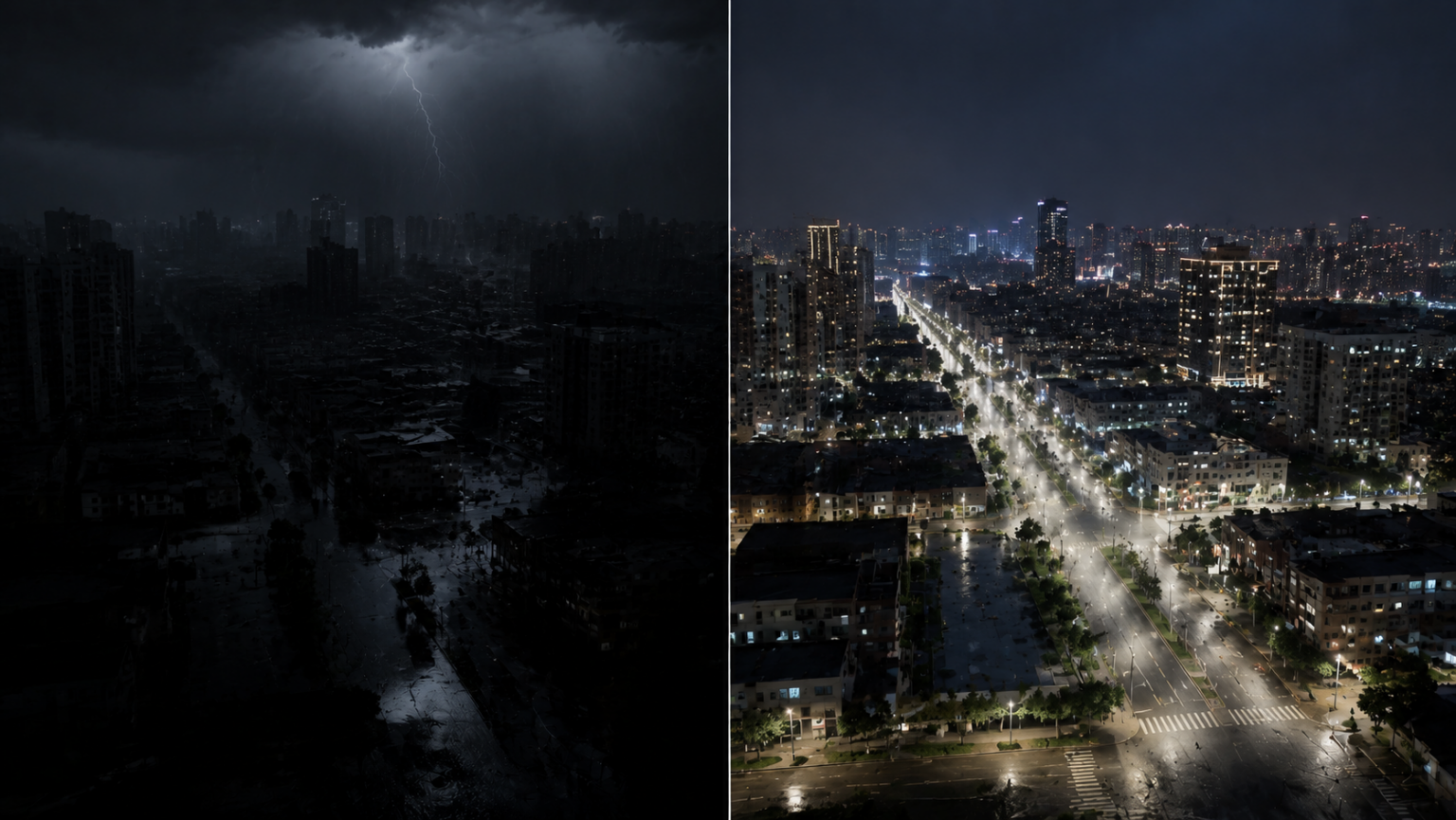
When natural disasters strike, traditional infrastructure often becomes the first casualty. A compromised electrical substation, a downed utility pole, or a waterlogged underground cable can instantly paralyze a city’s entire lighting and security network. This heavy dependency on centralized, interconnected electricity creates a dangerous domino effect during crises:
Compromised Public Safety & Emergency Response: Pitch-black streets not only escalate public panic but severely hinder first responders. Without adequate illumination, traffic accidents spike, evacuation routes become hazardous, and medical or rescue vehicles lose their “golden hours” of post-disaster operations.
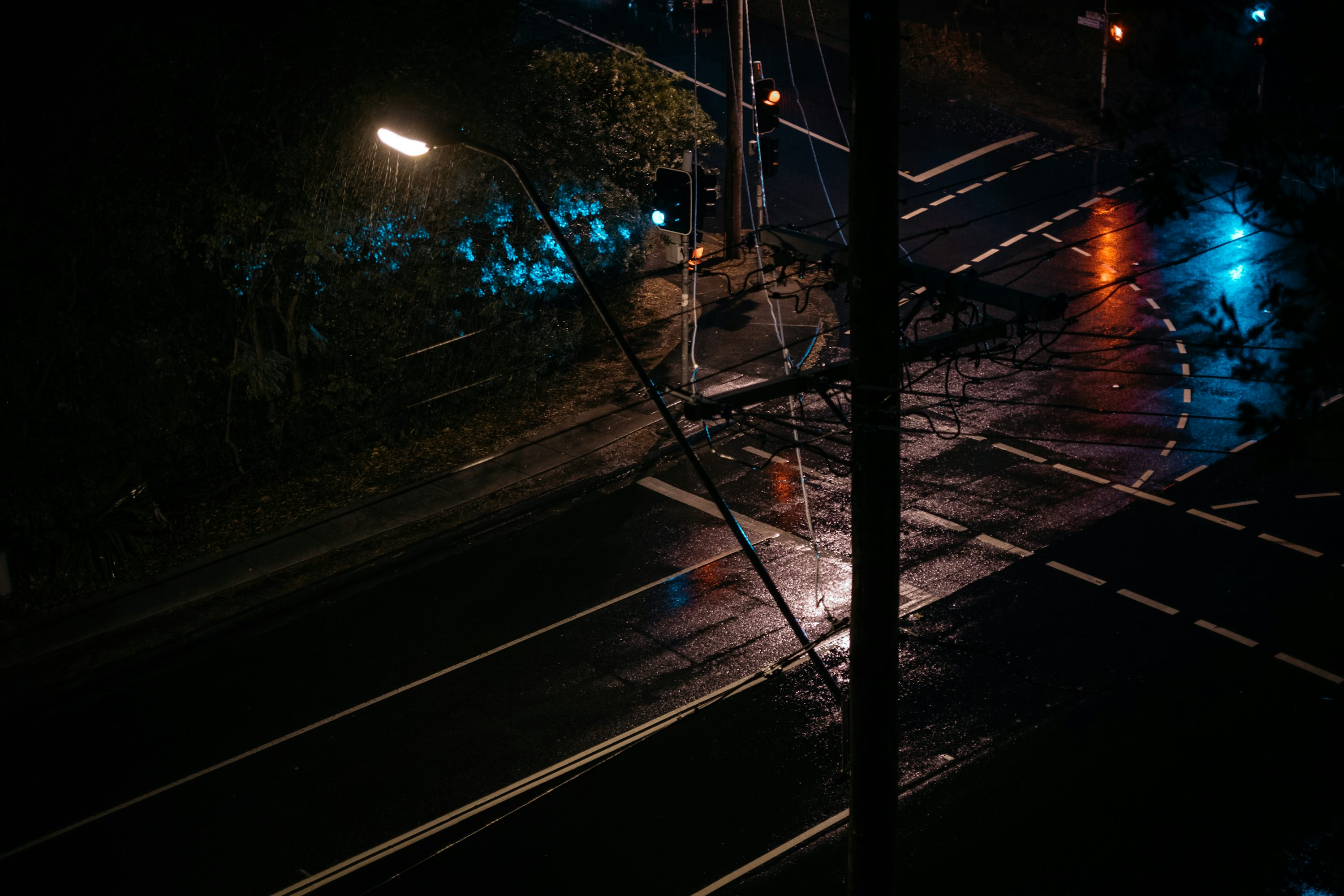
Material Failure in Harsh Climates: In coastal regions prone to high salt fog, extreme humidity, and hurricane-force winds, conventional street lights are highly susceptible to rapid corrosion, water ingress, and structural failure. Extreme temperature fluctuations can also cause thermal shock to inferior materials, leading to costly replacements and overhead safety hazards.
Inefficient Recovery & Financial Drain: Restoring a damaged centralized grid takes weeks and requires massive capital and human resources. Excavating roads to replace short-circuited underground wiring is incredibly expensive. This leaves affected communities in the dark precisely when they need light the most, while simultaneously draining municipal emergency budgets.
The Economic and ESG Imperative for Decentralization
—————————————————-
Beyond crisis management, there is a growing consensus that rebuilding the exact same vulnerable grid is a poor financial strategy. Municipalities today are squeezed between tightening operational budgets and strict Environmental, Social, and Governance (ESG) mandates. By transitioning to decentralized infrastructure, city managers can achieve dual goals: maximizing disaster preparedness while completely eliminating the ongoing energy costs associated with street lighting.
Financial Benefit:
Removing streetlights from the municipal utility bill frees up capital for other essential city services.
ESG & Carbon Targets:
Adopting 100% renewable solar lighting drastically reduces a city’s Scope 2 carbon emissions, helping governments meet aggressive decarbonization targets.
Off-Grid Resilience: E-Lite’s “Energy Independent” Solution
———————————————————–
To combat these systemic vulnerabilities, decentralized off-grid solar street lights have emerged as the definitive, fail-safe solution for extreme weather infrastructure. As an industry pioneer, E-Lite Semiconductor delivers highly engineered, energy-independent lighting systems that function entirely outside the traditional power grid.
By eliminating the need for extensive underground trenching, trenching permits, and complex cabling, E-Lite completely bypasses the risk of flood-induced short circuits.
Key Technology:
LiFePO4 Battery System
Our high-performance solar lighting systems are equipped with high-conversion monocrystalline silicon panels that capture maximum sunlight even in low-light conditions. Paired with temperature-resilient, deep-cycle Lithium Iron Phosphate (LiFePO4) batteries, the system guarantees superior thermal stability—preventing overheating in scorching deserts and maintaining reliable capacity in freezing winters. This premium energy storage ensures uninterrupted, high-lumen illumination even during extended periods of continuous rain or severe power outage scenarios.
Built to Survive: IP66 & Category 5 Typhoon Resistance
E-Lite products are engineered for sheer survival. Featuring an aerodynamic, highly wind-resistant aluminum alloy housing and top-tier IP66 waterproof ratings, these luminaires are built to withstand Category 5 typhoons, torrential floods, and the severe salt-spray corrosion typical of harsh coastal environments. Our robust structural design guarantees steadfast performance when nature is at its most unforgiving.
Empowered by iNET AIoT: Smart Management in Crisis
————————————————–
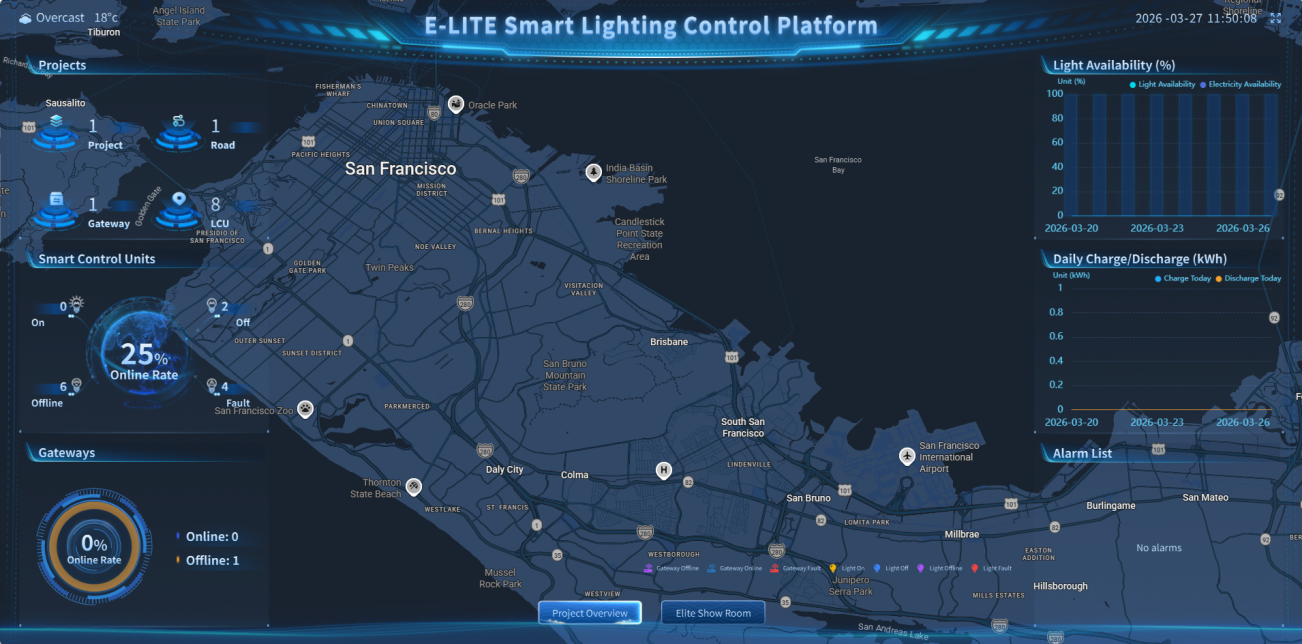
True grid resilience requires more than just rugged hardware; it demands an intelligent, proactive “brain.” E-Lite elevates traditional lighting into smart urban infrastructure through our proprietary iNET AIoT (Artificial Intelligence of Things) ecosystem.
Pre-Storm: Remote Smart Dimming
When meteorologists forecast an incoming storm, city managers can utilize the centralized iNET platform to remotely activate Smart Dimming protocols across thousands of streetlights in seconds, maximizing battery conservation before the severe weather even hits.
During Crisis: Edge Computing Autonomy
If local communication networks or cell towers fail during a disaster, the edge computing capabilities embedded within E-Lite’s smart controllers ensure the lights continue to operate autonomously. They rely on pre-set environmental triggers, microwave sensors, and daylight harvesting algorithms to optimize lighting without needing a cloud connection.
Post-Storm: Predictive Maintenance
Once the network is restored, the system automatically runs remote diagnostics, pinpointing any physical damage, battery degradation, or panel shading, and reporting it directly to the dashboard. This predictive maintenance effectively eliminates the need for dangerous, post-disaster manual inspections, saving municipalities vital time, drastically reducing labor costs, and ensuring maintenance crews only deploy when absolutely necessary.
Beyond Lighting: Securing the Lifeline of Smart Cities
——————————————————
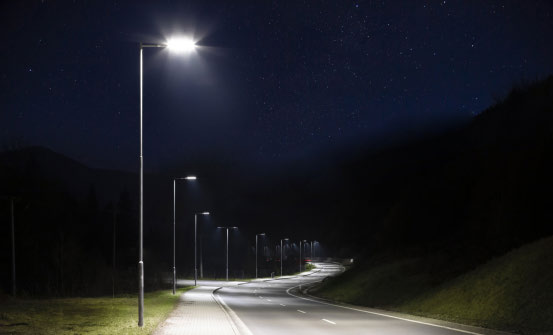
At E-Lite Semiconductor, our mission goes “Beyond Lighting.” We believe that in the face of an unpredictable global climate, lighting is no longer just a basic urban amenity—it is the very lifeline of a city. By integrating robust, high-durability off-grid solar technology with advanced, secure AIoT management software, E-Lite provides municipalities, urban planners, and EPC contractors with the ultimate tool to protect their citizens, safeguard their investments, and build truly sustainable communities.
Ready to Fortify Your City’s Infrastructure?
Contact the E-Lite engineering team today to explore our resilient off-grid solar solutions, request a custom ROI analysis, or schedule a consultation to upgrade your next project to a certified climate-resilient standard.
E-Lite Semiconductor Co., Ltd
Email: [hello@elitesemicon.com]
Web: [www.elitesemicon.com]
Post time: May-14-2026


