
E-lite INET smart control system get applied into hybrid solar lighting with seamlessly switch AC/DC
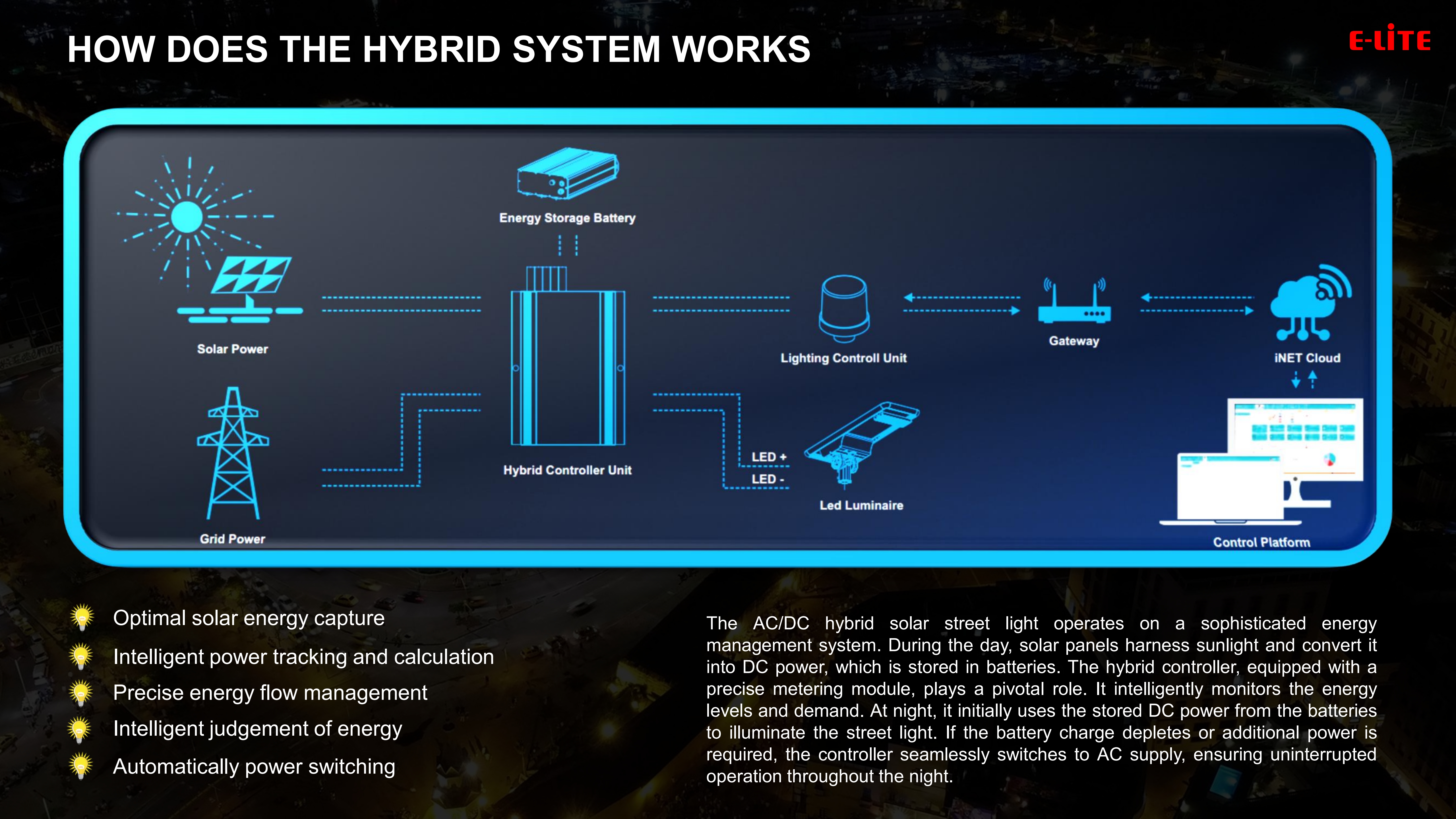
Integrating the E-Lite iNET smart control system into hybrid solar street lighting (Solar + AC Grid backup) ensures 365-day lighting autonomy while maximizing energy savings. By combining intelligent power routing, real-time Battery Management System (BMS) diagnostics, and automated relay control, the system achieves a seamless transition between DC (solar/battery) and AC (grid) power without luminaire flicker or power interruption.
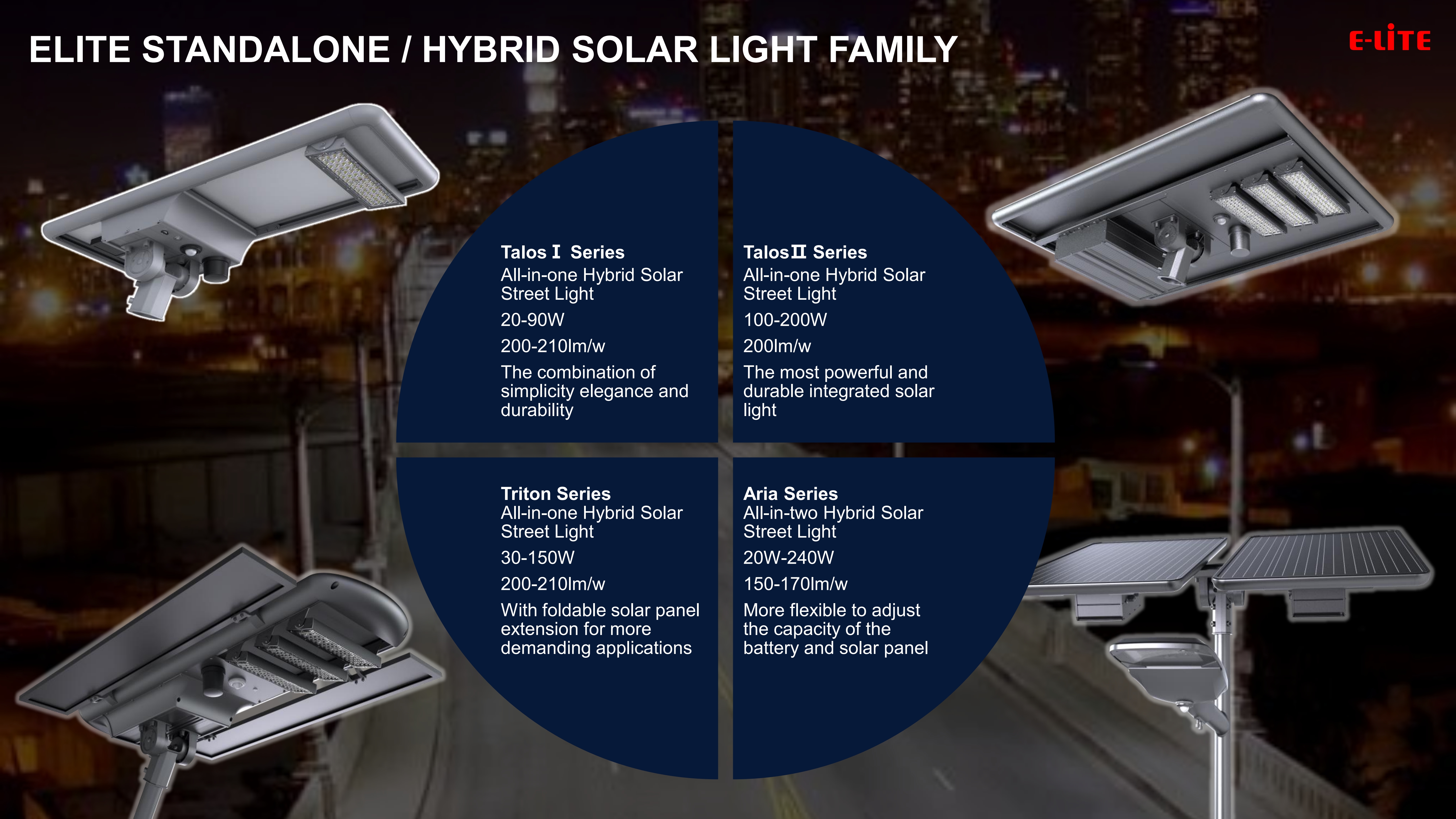
Dual-Power Hardware Architecture
The hybrid setup relies on an integrated power-handling architecture managed by the E-Lite smart controller and driver:
- Dual Inputs: The system accepts a DC input from the photovoltaic (PV) panels / Grade A+ LiFePO4 battery bank and an AC grid input (100 – 240V/277V AC) through an integrated industrial-grade switching power supply or AC/ DC relay module.
- Smart Driver Integration: The LED driver is engineered to handle dual-source inputs or work in tandem with a specialized hybrid controller that modulates voltage smoothly whether sourced from the battery charge controller or the municipal grid.
Intelligent AC/ DC Switching Logic
The “seamless” aspect of the transition is governed by module embedded in battery pack operating via the following workflow:
Continuous BPMM Module Monitoring: The iNET controller constantly monitors the battery’s voltage thresholds via high-accuracy BMS communication (maintaining precise diagnostics).
Threshold-Triggered Transition:
- Discharging Phase: During standard operation, the luminaire runs entirely on solar energy stored in the LiFePO4 battery.
- Backup Activation: When extended rainy or cloudy days cause the battery voltage to drop to a preset critical threshold (e.g., a specific cut-off voltage), the iNET controller commands an internal solid-state relay to switch the power feed to the municipal AC grid.
- Zero-Lag Switching: The relay transition is synchronized within milliseconds, preventing voltage dips, reset delays, or visible flickering on the LED luminaire.
- Automatic Solar Priority Recovery: Once daylight returns and photovoltaic generation recharges the battery above a safe operating threshold, the iNET controller smoothly ramps the load back to 100% solar power, minimizing grid electricity consumption.
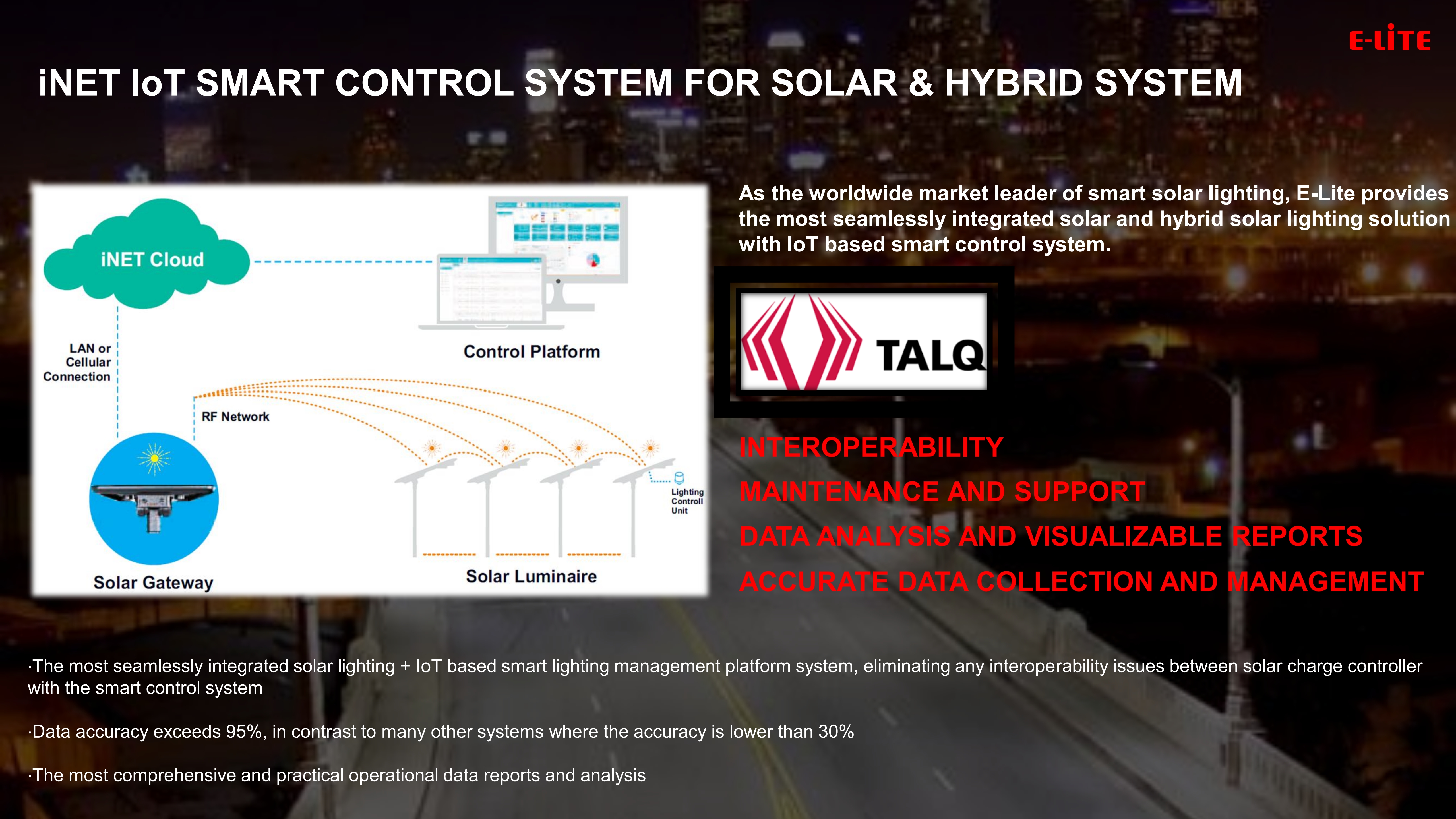
iNET IoT & Remote Platform Capabilities
Through the proprietary iNET smart lighting platform (compatible with standard NEMA or Zhaga Book 18 interfaces), operators gain full visibility and control over hybrid deployments:
Key Advantages for Project Engineering
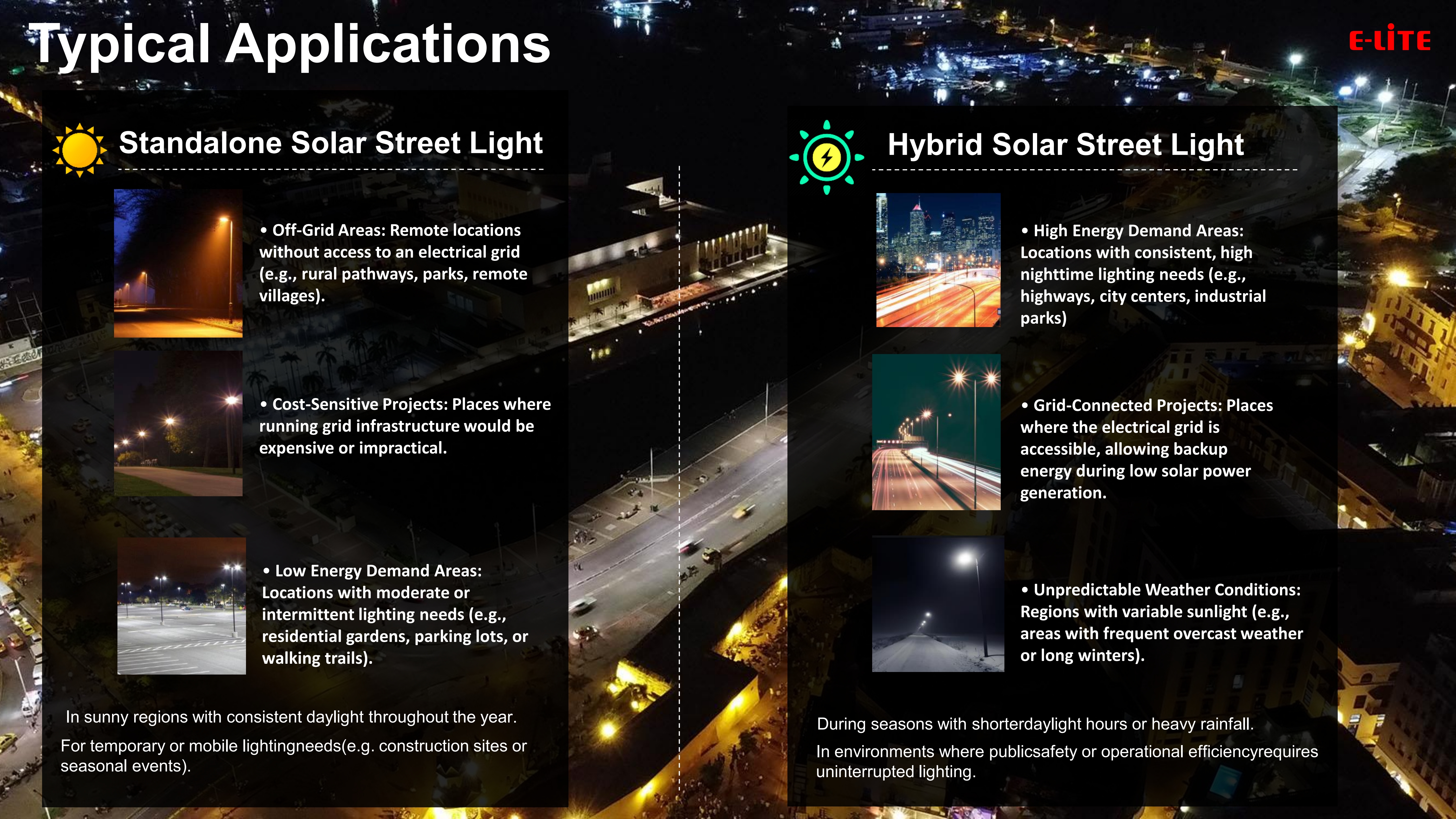
- Optimized Battery Sizing: Because the AC grid acts as a fail-safe for prolonged low-insolation periods, projects do not need to oversize battery banks for extreme worst-case scenarios, significantly lowering upfront CAPEX.
- Uninterrupted Reliability: Eliminates the risk of dark poles in critical urban infrastructure or highways during severe winter weather or monsoon seasons.
- Centralized Management: Integrates seamlessly into smart city ecosystems where traditional solar lights and hybrid poles can be managed side-by-side from the same cloud dashboard.
Post time: Oct-07-2026


